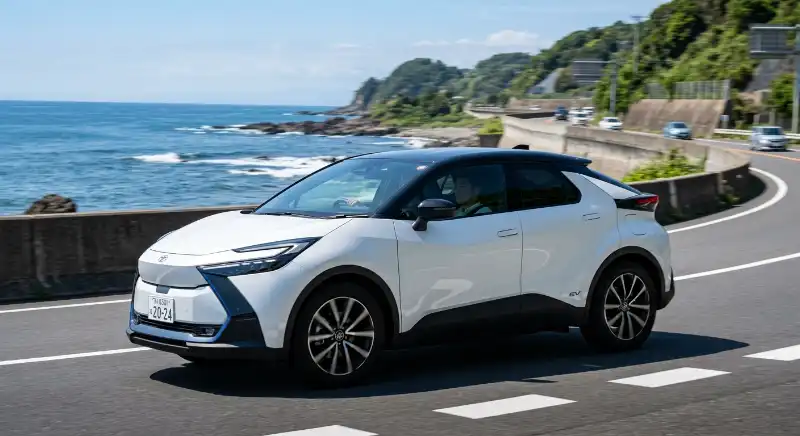
Imagine this: You’ve finally made the jump. You traded the gas pump for a charging cable, and your Toyota C-HR EV is sitting pretty in the driveway. It’s sleek, it’s quiet, and it makes you feel like you’re living in the future.
Then, the letter arrives. Or maybe a notification pops up on your phone. The word “Recall” flashes in bold, and suddenly, that futuristic feeling turns into a bit of a headache.
Let’s be honest, nobody likes hearing their car has a flaw. But when we talk about the toyota c-hr electric vehicle recall, we aren’t just talking about a loose floor mat or a squeaky hinge. We’re talking about the heart of the beast—the electrical system.
If you’re feeling a bit anxious, breathe. It happens to the best of them. Even a giant like Toyota, known for bulletproof reliability, hits a snag when navigating the high-voltage world of pure electric power.
What Exactly Triggered the Toyota C-HR Electric Vehicle Recall?
So, what’s the big deal? Why is Toyota asking these specific C-HR models to come back home to the dealership? The core of the issue usually boils down to how the car handles its massive amount of electricity.
In many of these specific recalls, the concern centers on the high-voltage battery system. Think of your battery as a giant, sophisticated chemical factory. If one tiny valve or sensor misbehaves, things can get spicy—and not in a good way.
Reports have surfaced regarding potential short circuits within the battery pack. This isn’t just a “car won’t start” kind of problem. A short circuit in a high-capacity lithium-ion battery can lead to excessive heat. Heat leads to smoke, and in rare, worst-case scenarios, fire.
Is your car going to explode tomorrow? Highly unlikely. But Toyota isn’t a company that plays fast and loose with safety. They’d rather fix ten thousand cars that might have an issue than deal with one that actually does.
The “Gremlins” in the Charging System
It’s not always just the physical battery cells. Sometimes, the brain of the car—the software—is the culprit. Have you ever had your smartphone freeze while charging? Now imagine that happening to a 3,500-pound vehicle.
Some versions of the toyota c-hr electric vehicle recall have focused on the charging ECU (Electronic Control Unit). This little computer manages how power flows from the wall into your car. If the software gets confused, it might allow too much current, causing components to overheat.
It’s a digital hiccup with physical consequences. A simple software patch often fixes these issues, but it still requires a professional touch. You can’t just “control-alt-delete” your car while cruising down the highway.
Why Does This Happen to a Brand Like Toyota?
Have you ever wondered why even the “reliable” brands struggle with EVs? It’s because the internal combustion engine (ICE) had a 100-year head start. We’ve perfected the art of exploding gasoline in metal tubes. Electric propulsion, however, is a whole different ballgame.
Toyota spent decades perfecting hybrids. They are the kings of the Prius. But a full EV like the C-HR (specifically the models sold in certain global markets) demands a different level of thermal management. The margins for error are razor-thin.
The manufacturing process for EV batteries is incredibly sensitive. A single microscopic speck of dust during the assembly of a battery cell can cause a “latent defect.” This defect might not show up for two years. Then, one day, it decides to act up.
This isn’t an excuse; it’s just the reality of the cutting edge. When you push the boundaries of energy density, the physical world occasionally pushes back.
How to Check if Your C-HR is Affected
Don’t sit there guessing. If you own a C-HR EV, you need to be proactive. Waiting for a letter in the mail is fine, but the internet is faster.
- Find your VIN: Look at the base of your windshield or inside the driver’s side door jamb. That 17-digit code is your car’s DNA.
- Visit the Toyota Recall Portal: Every major region has a dedicated Toyota website where you can plug in your VIN. It will tell you instantly if there’s an open recall.
- Call your local dealer: Sometimes, the human touch is better. Give them a ring, read them the VIN, and ask if your car needs “the update.”
Let’s look at the facts: ignoring a recall doesn’t just put you at risk; it kills your resale value. When you eventually want to trade in that C-HR, the first thing a buyer will check is the service history. An unaddressed safety recall is a massive red flag.
The Repair Process: What Should You Expect?
So, you’ve confirmed your car is part of the toyota c-hr electric vehicle recall. What now? Do you have to leave your car at the shop for a month? Usually, no.
If the fix is software-related, you might be in and out in an hour. The technician plugs a laptop into your car’s OBD-II port, uploads the new code, runs a few diagnostics, and sends you on your way. It’s basically a system update for your car.
However, if the recall involves the physical battery pack or high-voltage wiring, things get a bit more intense. They might need to drop the battery tray, inspect the cells, or replace specific modules. In these cases, Toyota usually provides a loaner car.
Quick Tip: Always ask for a loaner when you book the appointment. Don’t wait until you arrive at the service center to find out they don’t have any cars left for the day.
Is the Fix Free?
Yes. Absolutely. Under no circumstances should a dealership charge you for a safety recall. Toyota picks up the tab for parts and labor. If a service advisor tries to slip a “diagnostic fee” onto your bill for a recall-related check, stand your ground. That’s not how this works.
The Impact on Toyota’s Reputation
Is Toyota losing its edge? Some critics say so. They point to the bZ4X wheel issues and now the C-HR EV recalls as proof that the giant is stumbling. But let’s take a step back. Look at the broader picture.
Every single manufacturer—Tesla, Ford, Hyundai, GM—has faced massive EV recalls. It’s the “growing pains” phase of a technological revolution. The real measure of a brand isn’t that they never have problems; it’s how they handle them when they do.
Toyota’s willingness to pull cars back and fix them at their own expense shows they still care about that “Quality, Durability, Reliability” (QDR) mantra. They’d rather take a hit to their pride today than a hit to their safety record tomorrow.
Staying Safe While You Wait for the Fix
If your car is flagged but your appointment isn’t for another two weeks, what should you do? Common sense is your best friend here.
- Park outside: If the recall mentions a fire risk, avoid parking in a closed garage attached to your house. It’s a “just in case” move.
- Avoid deep discharges: Try to keep your battery between 20% and 80%. Extreme states of charge put more stress on the cells.
- Monitor charging: If possible, charge your car while you’re awake and home. If you smell something odd or see a warning light, unplug it immediately.
Safety isn’t about being paranoid; it’s about being prepared. Most of these recalls are “preventative,” meaning they haven’t actually caused many real-world incidents yet. They want to catch the problem before it becomes a headline.
The Road Ahead for the C-HR
The C-HR remains a fantastic vehicle. It’s quirky, it handles well, and the electric version is a smooth operator. This recall is a bump in the road, not the end of the journey. Once the fix is applied, you can go back to enjoying that instant torque and silent cruising with total peace of mind.
The transition to electric is messy. It’s complicated. But it’s also inevitable. As Toyota learns from these recalls, the next generation of EVs will be even better. That’s how engineering works—you break things, you fix them, and you make sure they never break that way again.
Have you received a notice about your C-HR? Or maybe you’ve already had the fix done at the dealership? I’d love to hear about your experience in the comments below. Did the process go smoothly, or was it a bit of a hassle? Let’s talk about it!
Stay safe, keep driving, and don’t ignore those letters!